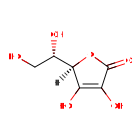
Vitamin C is a vitamin used to correct vitamin C deficiency and to increase the intestinal absorption of iron. A six carbon compound related to glucose.
- Mechanism
- Curator reviewed
In humans, an exogenous source of ascorbic acid is required for collagen formation and tissue repair by acting as a cofactor in the posttranslational formation of 4-hydroxyproline in -Xaa-Pro-Gly- sequences in collagens and other proteins. Ascorbic acid is reversibly oxidized to dehydroascorbic acid in the body. These two forms of the vitamin are believed to be important in oxidation-reduction reactions. The vitamin is involved in tyrosine metabolism, conversion of folic acid to folinic acid, carbohydrate metabolism, synthesis of lipids and proteins, iron metabolism, resistance to infections, and cellular respiration.
- Primary indication
- Used to treat vitamin C deficiency, scurvy, delayed wound and bone healing, urine acidification, and in general as an antioxidant.Curator reviewed · 27 structured indications
- Formula / weight
- C6H8O6 · 176.1241 g/mol (avg)
- First approval
- Canada, 1996 · United States, 2001
- Also known as
- Ascorbate · Vitamin-C
- Code names
- E-300 · FEMA NO. 2109 · INS-300 · INS NO.300 · NSC-218455 · NSC-33832
- Brand names
Resolves to
CIWBSHSKHKDKBQ-JLAZNSOCSA-NSMILES[H][C@@]1(OC(=O)C(O)=C1O)[C@@H](O)COWhat you can answer from here — as of September 23, 2026
Which drugs share a target with Vitamin C, and which of those have an active Phase 3 trial?
Create a free account or log in to explore the full data card.
Create Account