Amantadine is a medication used to treat dyskinesia in Parkinson's patients receiving levodopa, as well as extrapyramidal side effects of medications. An antiviral that is used in the prophylactic or symptomatic treatment of influenza A.
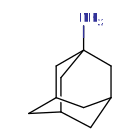
- Mechanism
- Curator reviewed
The mechanism of its antiparkinsonic effect is not fully understood, but it appears to be releasing dopamine from the nerve endings of the brain cells, together with stimulation of norepinephrine response. It also has NMDA receptor antagonistic effects. The antiviral mechanism seems to be unrelated. The drug interferes with a viral protein, M2 (an ion channel), which is needed for the viral particle to become "uncoated" once it is taken inside the cell by endocytosis.
- Primary indication
- For the chemoprophylaxis, prophylaxis, and treatment of signs and symptoms of infection caused by various strains of influenza A virus.Curator reviewed · 9 structured indications
- Formula / weight
- C10H17N · 151.2487 g/mol (avg)
- First approval
- Canada, 2001 · United States, 1976
- Also known as
- Amantidine · Aminoadamantane
- Brand names
Resolves to
DKNWSYNQZKUICI-UHFFFAOYSA-NSMILESNC12CC3CC(CC(C3)C1)C2What you can answer from here — as of September 23, 2026
Which drugs share a target with Amantadine, and which of those have an active Phase 3 trial?
Create a free account or log in to explore the full data card.
Create Account