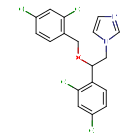
Miconazole is an azole antifungal with broad-spectrum activity used to treat fungal infections affecting the vagina, mouth and skin, including candidiasis. It is widely used to treat mucosal yeast infections, including both oral and vaginal infections; although intravenous miconazole is no longer available, a wide variety of suppositories, creams, gels, and tablet-based products are available.
- Mechanism
- Curator reviewed · 10 references
Miconazole is an azole antifungal used to treat a variety of conditions, including those caused by Candida overgrowth. Unique among the azoles, miconazole is thought to act through three main mechanisms. The primary mechanism of action is through inhibition of the CYP450 14α-lanosterol demethylase enzyme, which results in altered ergosterol production and impaired cell membrane composition and permeability, which in turn leads to cation, phosphate, and low molecular weight protein leakage.
In addition, miconazole inhibits fungal peroxidase and catalase while not affecting NADH oxidase activity, leading to increased production of reactive oxygen species (ROS). Increased intracellular ROS leads to downstream pleiotropic effects and eventual apoptosis.
Lastly, likely as a result of lanosterol demethylation inhibition, miconazole causes a rise in intracellular levels of farnesol. This molecule participates in quorum sensing in Candida, preventing the transition from yeast to mycelial forms and thereby the formation of biofilms, which are more resistant to antibiotics. In addition, farnesol is an inhibitor of drug efflux ABC transporters, namely Candida CaCdr1p and CaCdr2p, which may additionally contribute to increased effectiveness of azole drugs.
- Primary indication
- Miconazole is indicated for the local treatment of oropharyngeal candidiasis in adult patients and for the adjunctive treatment of diaper dermatitis complicated by candidiasis in immunocompetent patients aged four weeks and older.Curator reviewed · 27 structured indications
- Formula / weight
- C18H14Cl4N2O · 416.129 g/mol (avg)
- First approval
- Canada, 1997 · United States, 1993
- Code names
- MJR 1762 · R 18134
- Brand names
Resolves to
BYBLEWFAAKGYCD-UHFFFAOYSA-NSMILESClC1=CC(Cl)=C(COC(CN2C=CN=C2)C2=C(Cl)C=C(Cl)C=C2)C=C1What you can answer from here — as of September 23, 2026
Which drugs share a target with Miconazole, and which of those have an active Phase 3 trial?
Create a free account or log in to explore the full data card.
Create Account