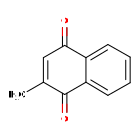
A synthetic naphthoquinone without the isoprenoid side chain and biological activity, but can be converted to active vitamin K2, menaquinone, after alkylation in vivo.
- Mechanism
- Curator reviewed
Menadione (vitamin K3) is involved as a cofactor in the posttranslational gamma-carboxylation of glutamic acid residues of certain proteins in the body. These proteins include the vitamin K-dependent coagulation factors II (prothrombin), VII (proconvertin), IX (Christmas factor), X (Stuart factor), protein C, protein S, protein Zv and a growth-arrest-specific factor (Gas6). In contrast to the other vitamin K-dependent proteins in the blood coagulation cascade, protein C and protein S serve anticoagulant roles. The two vitamin K-dependent proteins found in bone are osteocalcin, also known as bone G1a (gamma-carboxyglutamate) protein or BGP, and the matrix G1a protein or MGP. Gamma-carboxylation is catalyzed by the vitamin K-dependent gamma-carboxylases. The reduced form of vitamin K, vitamin K hydroquinone, is the actual cofactor for the gamma-carboxylases. Proteins containing gamma-carboxyglutamate are called G1a proteins.
- Primary indication
- The primary known function of vitamin K is to assist in the normal clotting of blood, but it may also play a role in normal bone calcification.Curator reviewed · 2 structured indications
- Formula / weight
- C11H8O2 · 172.18 g/mol (avg)
- Also known as
- Vitamin K 3 · Vitamin K3
- Code names
- USAF EK-5185
Resolves to
MJVAVZPDRWSRRC-UHFFFAOYSA-NSMILESCC1=CC(=O)C2=CC=CC=C2C1=OWhat you can answer from here — as of September 23, 2026
Which drugs share a target with Menadione, and which of those have an active Phase 3 trial?
Create a free account or log in to explore the full data card.
Create Account