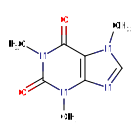
Caffeine is a stimulant present in tea, coffee, cola beverages, analgesic drugs, and agents used to increase alertness. It is also used in to prevent and treat pulmonary complications of premature birth. Caffeine is a drug of the methylxanthine class used for a variety of purposes, including certain respiratory conditions of the premature newborn, pain relief, and to combat drowsiness.
- Mechanism
- Curator reviewed · 13 references
The mechanism of action of caffeine is complex, as it impacts several body systems, which are listed below. The effects as they relate to various body systems are described as follows:
General and cellular actions
Caffeine exerts several actions on cells, but the clinical relevance is poorly understood. One probable mechanism is the inhibition of nucleotide phosphodiesterase enzymes, adenosine receptors, regulation of calcium handling in cells, and participates in adenosine receptor antagonism. Phosphodiesterase enzymes regulate cell function via actions on second messengers cAMP and cGMP. This causes lipolysis through activation of hormone-sensitive lipases, releasing fatty acids and glycerol.
Respiratory
The exact mechanism of action of caffeine in treating apnea related to prematurity is unknown, however, there are several proposed mechanisms, including respiratory center stimulation in the central nervous system, a reduced threshold to hypercapnia with increased response, and increased consumption of oxygen, among others. The blocking of the adenosine receptors enhances respiratory drive via an increase in brain medullary response to carbon dioxide, stimulating ventilation and respiratory drive, while increasing contractility of the diaphragm.
Central nervous system
Caffeine demonstrates antagonism of all 4 adenosine receptor subtypes (A1, A2a, A2b, A3) in the central nervous system. Caffeine's effects on alertness and combatting drowsiness are specifically related to the antagonism of the A2a receptor.
Renal system
Caffeine has diuretic effects due to is stimulatory effects on renal blood flow, increase in glomerular filtration, and increase in sodium excretion.
Cardiovascular system
Adenosine receptor antagonism at the A1 receptor by caffeine stimulates inotropic effects in the heart. Blocking of adenosine receptors promotes catecholamine release, leading to stimulatory effects occurring in the heart and the rest of the body. In the blood vessels, caffeine exerts direct antagonism of adenosine receptors, causing vasodilation. It stimulates the endothelial cells in the blood vessel wall to release nitric oxide, potentiating blood vessel relaxation. Catecholamine release, however, antagonizes this and exerts inotropic and chronotropic effects on the heart, ultimately leading to vasoconstriction. Finally, caffeine is shown to raise systolic blood pressure measurements by 5 to 10 mmHg when it is not taken regularly, versus no effect in those who consume it regularly. The vasoconstricting effects of caffeine are beneficial in migraines and other types of headache, which are normally caused by vasodilation in the brain.
- Primary indication
- Caffeine is indicated for the short term treatment of apnea of prematurity in infants and off label for the prevention and treatment of bronchopulmonary dysplasia caused by premature birth.Curator reviewed · 35 structured indications
- Formula / weight
- C8H10N4O2 · 194.1906 g/mol (avg)
- First approval
- Canada, 1996 · United States, 1953 · European Union, 2016
- Also known as
- 1-methyltheobromine · 7-methyltheophylline · Guaranine · Methyltheobromine · Theine
- Code names
- Fema no. 2224 · NSC-5036
- Brand names
Resolves to
RYYVLZVUVIJVGH-UHFFFAOYSA-NSMILESCN1C=NC2=C1C(=O)N(C)C(=O)N2CWhat you can answer from here — as of September 23, 2026
Which drugs share a target with Caffeine, and which of those have an active Phase 3 trial?
Create a free account or log in to explore the full data card.
Create Account