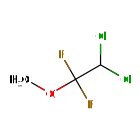
An inhalation anesthetic. Currently, methoxyflurane is rarely used for surgical, obstetric, or dental anesthesia. If so employed, it should be administered with nitrous oxide to achieve a relatively light level... (From AMA Drug Evaluations Annual, 1994, p180) In the US, methoxyflurane is one of the products that have been withdrawn or removed from the market for reasons of safety or effectiveness.
- Mechanism
- Curator reviewed
Methoxyflurane induces a reduction in junctional conductance by decreasing gap junction channel opening times and increasing gap junction channel closing times. Methoxyflurane also activates calcium dependent ATPase in the sarcoplasmic reticulum by increasing the fluidity of the lipid membrane. It also appears to bind the D subunit of ATP synthase and NADH dehydogenase. Methoxyflurane also binds to the GABA receptor, the large conductance Ca2+ activated potassium channel, the glutamate receptor and the glycine receptor.
- Primary indication
- For use in the induction and maintenance of general anesthesiaCurator reviewed · 2 structured indications
- Formula / weight
- C3H4Cl2F2O · 164.966 g/mol (avg)
- First approval
- Canada, 2026
- Also known as
- Methoflurane · Methoxy flurane · Methoxyfluoran · Methoxyfluran
- Code names
- DA-759 · NSC-110432
Resolves to
RFKMCNOHBTXSMU-UHFFFAOYSA-NSMILESCOC(F)(F)C(Cl)ClWhat you can answer from here — as of September 23, 2026
Which drugs share a target with Methoxyflurane, and which of those have an active Phase 3 trial?
Create a free account or log in to explore the full data card.
Create Account