Fluvastatin is an HMG-CoA reductase inhibitor used to lower lipid levels and reduce the risk of cardiovascular disease including myocardial infarction and stroke. Fluvastatin is an antilipemic agent that competitively inhibits hydroxymethylglutaryl-coenzyme A (HMG-CoA) reductase.
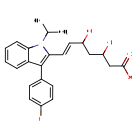
- Mechanism
- Curator reviewed
Fluvastatin selectively and competitively inhibits the hepatic enzyme hydroxymethylglutaryl-coenzyme A (HMG-CoA) reductase. HMG-CoA reductase is responsible for converting HMG-CoA to mevalonate, the rate-limiting step in cholesterol biosynthesis. Inhibition results in a decrease in hepatic cholesterol levels which stimulates the synthesis of LDL receptors and increases hepatic uptake of LDL cholesterol. The end result is decreased levels of plasma total and LDL cholesterol.
- Primary indication
- To be used as an adjunct to dietary therapy to prevent cardiovascular events.Curator reviewed · 6 structured indications
- Formula / weight
- C24H26FNO4 · 411.473 g/mol (avg)
- First approval
- Canada, 1997 · United States, 1994
- Brand names
Resolves to
FJLGEFLZQAZZCD-VAWYXSNFSA-NSMILESCC(C)N1C(\C=C\C(O)CC(O)CC(O)=O)=C(C2=CC=CC=C12)C1=CC=C(F)C=C1What you can answer from here — as of September 23, 2026
Which drugs share a target with Fluvastatin, and which of those have an active Phase 3 trial?
Create a free account or log in to explore the full data card.
Create Account