Tolbutamide is a sulfonylurea used to treat hyperglycemia in patients with type 2 diabetes mellitus. Tolbutamide is an oral antihyperglycemic agent used for the treatment of non-insulin-dependent diabetes mellitus (NIDDM).
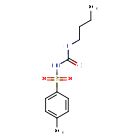
- Mechanism
- Curator reviewed
Sulfonylureas lower blood glucose in patients with NIDDM by directly stimulating the acute release of insulin from functioning beta cells of pancreatic islet tissue by an unknown process that involves a sulfonylurea receptor (receptor 1) on the beta cell. Sulfonylureas inhibit the ATP-potassium channels on the beta cell membrane and potassium efflux, which results in depolarization and calcium influx, calcium-calmodulin binding, kinase activation, and release of insulin-containing granules by exocytosis, an effect similar to that of glucose.
- Primary indication
- For treatment of NIDDM (non-insulin-dependent diabetes mellitus) in conjunction with diet and exercise.Curator reviewed · 1 structured indication
- Formula / weight
- C12H18N2O3S · 270.348 g/mol (avg)
- First approval
- Canada, 2010 · United States, 1979
- Also known as
- Tolylsulfonylbutylurea
- Code names
- NSC-23813 · NSC-87833
Resolves to
JLRGJRBPOGGCBT-UHFFFAOYSA-NSMILESCCCCNC(=O)NS(=O)(=O)C1=CC=C(C)C=C1What you can answer from here — as of September 23, 2026
Which drugs share a target with Tolbutamide, and which of those have an active Phase 3 trial?
Create a free account or log in to explore the full data card.
Create Account