DB00411ApprovedSmall moleculeCholinergic Receptor AgonistMioticsParasympathomemetic (Cholinergic) Agents
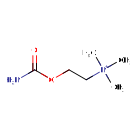
Carbachol is a direct acting miotic agent administered ophthalmically to decrease intraocular pressure after cataract surgery, and to induce miosis during surgery. Carbamoylcholine, also known as carbachol, is a muscarinic agonist discovered in 1932.
- Mechanism
- Curator reviewed · 4 references
Carbamoylcholine is a parasympathomimetic that acts as an agonist of muscarinic and nicotinic receptors. Intraocular administration leads to miosis and decreases intraocular pressure via increased aqueous humour outflow.
- Primary indication
- Carbamoylcholine is indicated to induce miosis for surgery and to reduce intraocular pressure elevations in the first 24 hours after cataract surgery.Curator reviewed · 5 structured indications
- Formula / weight
- C6H15N2O2 · 147.1955 g/mol (avg)
- First approval
- Canada, 1996 · United States, 1974
- Also known as
- Carbacholine · Carbamylcholine · Choline carbamate
- Brand names
Resolves to
Clinical / RWD
Structure
InChIKey
VPJXQGSRWJZDOB-UHFFFAOYSA-OSMILESC[N+](C)(C)CCOC(N)=OWhat you can answer from here — as of September 23, 2026
5Protein targetsEach mapped to UniProt, with action and pharmacological actionListed above
Which drugs share a target with Carbachol, and which of those have an active Phase 3 trial?
Create a free account or log in to explore the full data card.
Create Account