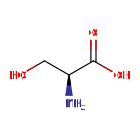
Serine is an amino acid commonly found as a component in total parenteral nutrition. A non-essential amino acid occurring in natural form as the L-isomer.
- Mechanism
- Curator reviewed
L-Serine plays a role in cell growth and development (cellular proliferation). The conversion of L-serine to glycine by serine hydroxymethyltransferase results in the formation of the one-carbon units necessary for the synthesis of the purine bases, adenine and guanine. These bases when linked to the phosphate ester of pentose sugars are essential components of DNA and RNA and the end products of energy producing metabolic pathways, ATP and GTP. In addition, L-serine conversion to glycine via this same enzyme provides the one-carbon units necessary for production of the pyrimidine nucleotide, deoxythymidine monophosphate, also an essential component of DNA.
- Primary indication
- Used as a natural moisturizing agent in some cosmetics and skin care products.Curator reviewed · 3 structured indications
- Formula / weight
- C3H7NO3 · 105.0926 g/mol (avg)
- First approval
- Canada, 1997 · United States, 1971
- Also known as
- (S)-Serine · beta-Hydroxyalanine · L-Serine
- Brand names
Resolves to
MTCFGRXMJLQNBG-REOHCLBHSA-NSMILESN[C@@H](CO)C(O)=OWhat you can answer from here — as of September 23, 2026
Which drugs share a target with Serine, and which of those have an active Phase 3 trial?
Create a free account or log in to explore the full data card.
Create Account