Physiologic methyl radical donor involved in enzymatic transmethylation reactions and present in all living organisms. It possesses anti-inflammatory activity and has been used in treatment of chronic liver disease. (From... (From Merck, 11th ed).
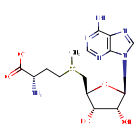
- Mechanism
- Curator reviewed
S-Adenosylmethionine (SAMe) is a natural substance present in the cells of the body. It is a direct metabolite of the essential amino acid L-methionine. SAMe plays a crucial biochemical role in the body by donating a one-carbon methyl group in a process called transmethylation. SAMe, formed from the reaction of L-methionine and adenosine triphosphate catalyzed by the enzyme S-adenosylmethionine synthetase, is the methyl-group donor in the biosynthesis of both DNA and RNA nucleic acids, phospholipids, proteins, epinephrine, melatonin, creatine and other molecules.
- Primary indication
- S-Adenosylmethionine (SAMe) is used as a drug in Europe for the treatment of depression, liver disorders, fibromyalgia, and osteoarthritis.Curator reviewed · 7 structured indications
- Formula / weight
- C15H22N6O5S · 398.44 g/mol (avg)
- Also known as
- AdoMet · L-S-Adenosylmethionine · S-Adenosylmethionine · SAM-e · SAMe
Resolves to
MEFKEPWMEQBLKI-AIRLBKTGSA-NSMILESC[S+](CC[C@H](N)C([O-])=O)C[C@H]1O[C@H]([C@H](O)[C@@H]1O)N1C=NC2=C1N=CN=C2NWhat you can answer from here — as of September 23, 2026
Which drugs share a target with Ademetionine, and which of those have an active Phase 3 trial?
Create a free account or log in to explore the full data card.
Create Account