Nitazoxanide is a thiazolide anti-infective used to treat infections by protozoa, helminths, anaerobic bacteria, microaerophilic bacteria, and viruses. Nitazoxanide belongs to the class of drugs known as thiazolides.
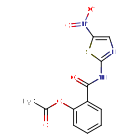
- Mechanism
- Curator reviewed · 3 references
The most widely accepted mechanism of NTZ is believed to be the disruption of the energy metabolism in anaerobic microbes by inhibition of the pyruvate: ferredoxin/flavodoxin oxidoreductase (PFOR) cycle. In parasitic-protozoa, Nitazoxanide also induces lesions in the cell membranes and depolarizes the mitochondrial membrane while inhibiting quinone oxidoreductase NQO1, nitroreductase-1 and protein disulphide isomerase enzymes. In addition, this drug also inhibits the glutathione-S-transferase (a major detoxifying enzyme) and modulates the Avr-14 gene, encoding for the alpha-type subunit of glutamate-gated chloride ion channel present in nematodes. Aside from its well understood non-competitive inhibition of the PFOR in anaerobic bacteria, NTZ also demonstrates various other antibacterial mechanisms. It inhibits pyruvate dehydrogenase in E Coli, disrupts the membrane potential and pH homeostasis in the Mycobacterium tuberculosis, suppresses the chaperone/usher (CU) pathway of the gram-negative bacteria, and stimulates host macrophage autophagy in tuberculosis patients. NTZ also suppresses viral replication by inhibiting the maturation of the viral hemagglutinin and the viral transcription factor immediate early 2 (IE2) as well as by activating the eukaryotic translation initiation factor 2α (an antiviral intracellular protein). Lastly, NTZ exhibits an inhibitory effect on tumor cell progression by altering drug detoxification (glutathione-S-transferase P1), unfolded protein response, autophagy, anti-cytokines activity, and c-Myc inhibition.
- Primary indication
- For the treatment of diarrhea in adults and children caused by the protozoa Giardia lamblia, and for the treatment of diarrhea in children caused by the protozoan, Cryptosporidium parvum.Curator reviewed · 2 structured indications
- Formula / weight
- C12H9N3O5S · 307.282 g/mol (avg)
- First approval
- United States, 2002
- Code names
- PH-5776
- Brand names
Resolves to
YQNQNVDNTFHQSW-UHFFFAOYSA-NSMILESCC(=O)OC1=CC=CC=C1C(=O)NC1=NC=C(S1)[N+]([O-])=OWhat you can answer from here — as of September 23, 2026
Which drugs share a target with Nitazoxanide, and which of those have an active Phase 3 trial?
Create a free account or log in to explore the full data card.
Create Account