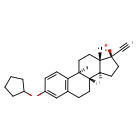
The 3-cyclopentyl ether of ethinyl estradiol.
- Mechanism
- Curator reviewed
Estrogens diffuse into their target cells and interact with a protein receptor (the estrogen receptor). Estrogen interacts with a target cell receptor. When the estrogen receptor has bound its ligand it can enter the nucleus of the target cell, and regulate gene transcription which leads to formation of messenger RNA. The mRNA interacts with ribosomes to produce specific proteins that express the effect of estradiol upon the target cell. Estrogens increase the hepatic synthesis of sex hormone binding globulin (SHBG), thyroid-binding globulin (TBG), and other serum proteins and suppress follicle-stimulating hormone (FSH) from the anterior pituitary. Target cells include the female reproductive tract, the mammary gland, the hypothalamus, and the pituitary. Estrogens increase the hepatic synthesis of sex hormone binding globulin (SHBG), thyroid-binding globulin (TBG), and other serum proteins and suppress follicle-stimulating hormone (FSH) from the anterior pituitary. The combination of an estrogen with a progestin suppresses the hypothalamic-pituitary system, decreasing the secretion of gonadotropin-releasing hormone (GnRH).
- Primary indication
- Used in hormone replacement therapy, treating symptoms of menopause such as hot flashes.Curator reviewed
- Formula / weight
- C25H32O2 · 364.5204 g/mol (avg)
- Code names
- W-3566
Resolves to
PWZUUYSISTUNDW-VAFBSOEGSA-NSMILES[H][C@@]12CC[C@@](O)(C#C)[C@@]1(C)CC[C@]1([H])C3=C(CC[C@@]21[H])C=C(OC1CCCC1)C=C3What you can answer from here — as of September 23, 2026
Which drugs share a target with Quinestrol, and which of those have an active Phase 3 trial?
Create a free account or log in to explore the full data card.
Create Account