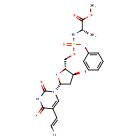
Thymectacin, a phosphoramidate derivative of (E)-5-(2-bromovinyl)-2'-deoxyuridine, is a novel small molecule anticancer agent. Thymectacin is selectively active against tumor cells expressing high levels of thymidylate synthase (TS), a critical enzyme... Thymectacin was as efficacious as irinotecan, a drug recently approved for the treatment of 5-fluorouracil-resistant colon cancer.
- Mechanism
- Curator reviewed
NB1011 targets thymidylate synthase (TS), which catalyzes the transformation of E-5-(2-bromovinyl)-2'-deoxyuridine-5'-monophosphate (BVdUMP) into cytotoxic reaction products. Due to the elevated levels of TS expression in tumor cells compared to normal cells, these cytotoxic products are preferentially generated inside tumor cells, and, as expected, NB1011 is more toxic to cells with higher levels of TS expression. Therefore, NB1011 therapy should kill tumor cells without severely damaging normal cells.
- Primary indication
- Investigated for use/treatment in colorectal cancer.Curator reviewed
- Formula / weight
- C21H25BrN3O9P · 574.321 g/mol (avg)
- Also known as
- Brivudine phosphoramidate
- Code names
- NB-1011
Resolves to
CFBLUORPOFELCE-BACVZHSASA-NSMILESCOC(=O)[C@H](C)NP(=O)(OC[C@H]1O[C@H](C[C@@H]1O)N1C=C(\C=C\Br)C(=O)NC1=O)OC1=CC=CC=C1What you can answer from here — as of January 29, 2025
Which drugs share a target with Thymectacin, and which of those have an active Phase 3 trial?
Create a free account or log in to explore the full data card.
Create Account