Investigated for use/treatment in fungal infections, bacterial infection, skin infections/disorders, and onychomycosis.
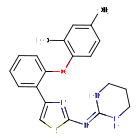
- Mechanism
- Curator reviewed
Abafungin has been shown to have fungicidal and fungistatic effects on a wide variety of pathogens, including dermatophytes, yeasts (Candida) and moulds. The drug acts on the infecting organisms in two ways: by interfering with the formation of a vital sterol in the fungal cell membrane, thereby preventing cell growth, and also by direct interaction with another membrane component resulting in membrane disruption, leakage of cellular contents and death of the cell and independent of whether it is in a non-metabolising (`resting') phase of development or actively growing. These features of abafungin, combined with the attainment of microbicidal concentrations in the skin from a 1% preparation, its long residence at the site of dermal application and the lack of significant systemic absorption, mean that Abasol(tm) is particularly attractive for the topical treatment of dermatomycoses, which is the first indication under review for marketing approval.
- Primary indication
- Investigated for use/treatment in fungal infections, bacterial infection, skin infections/disorders, and onychomycosis.Curator reviewed
- Formula / weight
- C21H22N4OS · 378.49 g/mol (avg)
- Code names
- BAY-W-6341
Resolves to
TYBHXIFFPVFXQW-UHFFFAOYSA-NSMILESCC1=CC(C)=C(OC2=CC=CC=C2C2=CSC(N=C3NCCCN3)=N2)C=C1What you can answer from here — as of March 06, 2025
Which drugs share a target with Abafungin, and which of those have an active Phase 3 trial?
Create a free account or log in to explore the full data card.
Create Account