Gepotidacin is a triazaacenaphthylene bacterial type II topoisomerase inhibitor for the treatment of female patients with uncomplicated urinary tract infections caused by susceptible microorganisms. Its target is similar to that of fluoroquinolone antibacterials - e.g. ciprofloxacin - while being structurally and pharmacologically distinct.
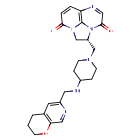
- Mechanism
- Curator reviewed · 6 references
The primary mechanism of action of gepotidacin involves the disruption of bacterial DNA replication through the selective inhibition of two essential bacterial enzymes: DNA gyrase (also known as topoisomerase II) and topoisomerase IV. These enzymes are crucial for bacteria as they manage the topological state of DNA during replication, transcription, and cell division. Gepotidacin exerts its inhibitory effect by binding to these enzymes in a manner that is distinct from other antibiotic classes, including fluoroquinolones - specifically, gepotidacin interacts with the GyrA subunit of bacterial DNA gyrase and the ParC subunit of bacterial topoisomerase IV. Structural studies have revealed that gepotidacin binds midway between the two scissile DNA bonds, within a pocket formed by these subunits.
- Primary indication
- Gepotidacin is indicated for the treatment of female patients ≥12 years of age weighing ≥40 kilograms with uncomplicated urinary tract infections caused by Escherichia coli, Klebsiella pneumoniae, Citrobacter freundii complex, Staphylococcus saprophyticus, or Enterococcus faecali.Curator reviewed · 5 structured indications
- Formula / weight
- C24H28N6O3 · 448.527 g/mol (avg)
- First approval
- United States, 2025
- Code names
- GSK-2140944
- Brand names
Resolves to
PZFAZQUREQIODZ-LJQANCHMSA-NSMILESO=C1C=CC2=C3N1C[C@@H](CN1CCC(CC1)NCC1=CC4=C(OCCC4)C=N1)N3C(=O)C=N2What you can answer from here — as of September 23, 2026
Which drugs share a target with Gepotidacin, and which of those have an active Phase 3 trial?
Create a free account or log in to explore the full data card.
Create Account