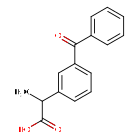
Ketoprofen is an NSAID used to treat rheumatoid arthritis, osteoarthritis, ankylosing spondylitis, dysmenorrhea, mild to moderate muscle pain, postoperative pain, and postpartum pain. Ketoprofen, a propionic acid derivative, is a nonsteroidal anti-inflammatory agent (NSAIA) with analgesic and antipyretic properties.
- Mechanism
- Curator reviewed
The anti-inflammatory effects of ketoprofen are believed to be due to inhibition cylooxygenase-2 (COX-2), an enzyme involved in prostaglandin synthesis via the arachidonic acid pathway. This results in decreased levels of prostaglandins that mediate pain, fever and inflammation. Ketoprofen is a non-specific cyclooxygenase inhibitor and inhibition of COX-1 is thought to confer some of its side effects, such as GI upset and ulceration. Ketoprofen is thought to have anti-bradykinin activity, as well as lysosomal membrane-stabilizing action. Antipyretic effects may be due to action on the hypothalamus, resulting in an increased peripheral blood flow, vasodilation, and subsequent heat dissipation.
- Primary indication
- For symptomatic treatment of acute and chronic rheumatoid arthritis, osteoarthritis, ankylosing spondylitis, primary dysmenorrhea and mild to moderate pain associated with musculotendinous trauma (sprains and strains), postoperative (including dental surgery) or postpartum pain.Curator reviewed · 11 structured indications
- Formula / weight
- C16H14O3 · 254.2806 g/mol (avg)
- First approval
- Canada, 1993 · United States, 1993
- Code names
- IDEA-033 · RP-19583 · RU-4733
- Brand names
Resolves to
DKYWVDODHFEZIM-UHFFFAOYSA-NSMILESCC(C(O)=O)C1=CC(=CC=C1)C(=O)C1=CC=CC=C1What you can answer from here — as of September 23, 2026
Which drugs share a target with Ketoprofen, and which of those have an active Phase 3 trial?
Create a free account or log in to explore the full data card.
Create Account