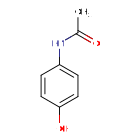
Acetaminophen is an analgesic drug used alone or in combination with opioids for pain management, and as an antipyretic agent. Acetaminophen (paracetamol), also commonly known as Tylenol, is the most commonly taken analgesic worldwide and is recommended as first-line therapy in pain conditions by the World Health Organization (WHO).
- Mechanism
- Curator reviewed · 10 references
According to its FDA labeling, acetaminophen's exact mechanism of action has not been fully established - despite this, it is often categorized alongside NSAIDs (non-steroidal anti-inflammatory drugs) due to its ability to inhibit the cyclo-oxygenase (COX) pathways. It is thought to exert central actions which ultimately lead to the alleviation of pain symptoms.
One theory is that acetaminophen increases the pain threshold by inhibiting two isoforms of cyclo-oxygenase, COX-1 and COX-2, which are involved in prostaglandin (PG) synthesis. Prostaglandins are responsible for eliciting pain sensations. Acetaminophen does not inhibit cyclooxygenase in peripheral tissues and, therefore, has no peripheral anti-inflammatory effects. Though acetylsalicylic acid (aspirin) is an irreversible inhibitor of COX and directly blocks the active site of this enzyme, studies have shown that acetaminophen (paracetamol) blocks COX indirectly. Studies also suggest that acetaminophen selectively blocks a variant type of the COX enzyme that is unique from the known variants COX-1 and COX-2. This enzyme has been referred to as COX-3. The antipyretic actions of acetaminophen are likely attributed to direct action on heat-regulating centers in the brain, resulting in peripheral vasodilation, sweating, and loss of body heat. The exact mechanism of action of this drug is not fully understood at this time, but future research may contribute to deeper knowledge.
Although further investigation is warranted, the active metabolite of acetaminophen (AM404) was shown to interact with several molecular targets, including the Cav3.2 calcium channel, the cannabinoid CB1 receptors, TRPV1 receptors, and Nav1.8 and Nav1.7 channels.
- Primary indication
- In general, acetaminophen is used for the treatment of mild to moderate pain and reduction of fever.Curator reviewed · 152 structured indications
- Formula / weight
- C8H9NO2 · 151.1626 g/mol (avg)
- First approval
- Canada, 1996 · United States, 1977
- Also known as
- Acenol · APAP · Paracetamol
- Code names
- NSC-109028 · NSC-3991
- Brand names
Resolves to
RZVAJINKPMORJF-UHFFFAOYSA-NSMILESCC(=O)NC1=CC=C(O)C=C1What you can answer from here — as of September 23, 2026
Which drugs share a target with Acetaminophen, and which of those have an active Phase 3 trial?
Create a free account or log in to explore the full data card.
Create Account