Ranitidine is a histamine H2 antagonist used to treat duodenal ulcers, Zollinger-Ellison syndrome, gastric ulcers, GERD, and erosive esophagitis. Ranitidine is a commonly used drug, classified as a histamine H2-receptor antagonist, and belongs to the same drug class as cimetidine and famotidine.
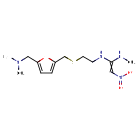
- Mechanism
- Curator reviewed · 3 references
After a meal, the hormone gastrin, produced by cells in the lining of the stomach, stimulates the release of histamine, which then binds to histamine H2 receptors, leading to the secretion of gastric acid. Ranitidine reduces the secretion of gastric acid by reversible binding to histamine (H2) receptors, which are found on gastric parietal cells. This process leads to the inhibition of histamine binding to this receptor, causing the reduction of gastric acid secretion. The relief of gastric-acid related symptoms can occur as soon as 60 minutes after administration of a single dose, and the effects can last from 4-10 hours, providing fast and effective symptomatic relief.
- Primary indication
- This drug is used alone or with concomitant antacids for the following conditions: short-term treatment of active duodenal ulcer, treating gastric acid hypersecretion due to Zollinger-Ellison syndrome, systemic mastocytosis, and other conditions that may pathologically...Curator reviewed · 30 structured indications
- Formula / weight
- C13H22N4O3S · 314.4 g/mol (avg)
- First approval
- Canada, 1996 · United States, 1983
- Brand names
Resolves to
VMXUWOKSQNHOCA-UHFFFAOYSA-NSMILESCNC(NCCSCC1=CC=C(CN(C)C)O1)=C[N+]([O-])=OWhat you can answer from here — as of September 28, 2026
Which drugs share a target with Ranitidine, and which of those have an active Phase 3 trial?
Create a free account or log in to explore the full data card.
Create Account