Ampicillin is a penicillin derivative used for the treatment of a variety of infections caused by gram-positive and gram-negative bacteria as well as some anaerobes. Ampicillin is a semi-synthetic derivative of penicillin that functions as an orally active broad-spectrum antibiotic.
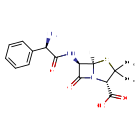
- Mechanism
- Curator reviewed
By binding to specific penicillin-binding proteins (PBPs) located inside the bacterial cell wall, Ampicillin inhibits the third and last stage of bacterial cell wall synthesis. Cell lysis is then mediated by bacterial cell wall autolytic enzymes such as autolysins; it is possible that Ampicillin interferes with an autolysin inhibitor.
- Primary indication
- For treatment of infection (Respiratory, GI, UTI and meningitis) due to E. coli, P. mirabilis, enterococci, Shigella, S. typhosa and other Salmonella, nonpenicillinase-producing N. gononhoeae, H. influenzae, staphylococci, streptococci including streptocCurator reviewed · 20 structured indications
- Formula / weight
- C16H19N3O4S · 349.405 g/mol (avg)
- First approval
- Canada, 2014 · United States, 1971
- Also known as
- ABPC · Aminobenzylpenicillin · Ampicillin acid
- Code names
- AY-6108 · Bayer 5427 · BRL-1341 · NSC-528986 · P-50 · WY 5103
- Brand names
Resolves to
AVKUERGKIZMTKX-NJBDSQKTSA-NSMILES[H][C@]12SC(C)(C)[C@@H](N1C(=O)[C@H]2NC(=O)[C@H](N)C1=CC=CC=C1)C(O)=OWhat you can answer from here — as of September 23, 2026
Which drugs share a target with Ampicillin, and which of those have an active Phase 3 trial?
Create a free account or log in to explore the full data card.
Create Account