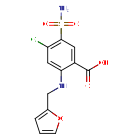
Furosemide is a loop diuretic used to treat hypertension and edema in congestive heart failure, liver cirrhosis, renal disease, and hypertension. Furosemide is a potent loop diuretic that acts on the kidneys to ultimately increase water loss from the body.
- Mechanism
- Curator reviewed · 4 references
Furosemide promotes diuresis by blocking tubular reabsorption of sodium and chloride in the proximal and distal tubules, as well as in the thick ascending loop of Henle. This diuretic effect is achieved through the competitive inhibition of sodium-potassium-chloride cotransporters (NKCC2) expressed along these tubules in the nephron, preventing the transport of sodium ions from the lumenal side into the basolateral side for reabsorption. This inhibition results in increased excretion of water along with sodium, chloride, magnesium, calcium, hydrogen, and potassium ions. As with other loop diuretics, furosemide decreases the excretion of uric acid.
Furosemide exerts direct vasodilatory effects, which results in its therapeutic effectiveness in the treatment of acute pulmonary edema. Vasodilation leads to reduced responsiveness to vasoconstrictors, such as angiotensin II and noradrenaline, and decreased production of endogenous natriuretic hormones with vasoconstricting properties. It also leads to increased production of prostaglandins with vasodilating properties. Furosemide may also open potassium channels in resistance arteries. The main mechanism of action of furosemide is independent of its inhibitory effect on carbonic anhydrase and aldosterone.
- Primary indication
- Furosemide is indicated for the treatment of edema associated with congestive heart failure, cirrhosis of the liver, and renal disease, including the nephrotic syndrome, in adults and pediatric patients.Curator reviewed · 16 structured indications
- Formula / weight
- C12H11ClN2O5S · 330.744 g/mol (avg)
- First approval
- Canada, 1997 · United States, 1966
- Also known as
- Frusemide · Furosemid
- Code names
- LB-502 · NSC-269420
- Brand names
Resolves to
ZZUFCTLCJUWOSV-UHFFFAOYSA-NSMILESNS(=O)(=O)C1=C(Cl)C=C(NCC2=CC=CO2)C(=C1)C(O)=OWhat you can answer from here — as of September 23, 2026
Which drugs share a target with Furosemide, and which of those have an active Phase 3 trial?
Create a free account or log in to explore the full data card.
Create Account