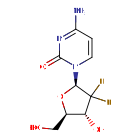
Gemcitabine is a nucleoside metabolic inhibitor used as adjunct therapy in the treatment of certain types of ovarian cancer, non-small cell lung carcinoma, metastatic breast cancer, and as a single agent for pancreatic cancer. It was originally investigated for its antiviral effects, but it is now used as an anticancer therapy for various cancers.
- Mechanism
- Curator reviewed · 6 references
Gemcitabine is a potent and specific deoxycytidine analog. After uptake into malignant cells, gemcitabine is phosphorylated by deoxycytidine kinase to form gemcitabine monophosphate, which is then converted to the active compounds, gemcitabine diphosphate (dFdCDP) and gemcitabine triphosphate (dFdCTP). These active metabolites are nucleosides that mediate antitumour effects. dFdCTP competes with deoxycytidine triphosphate (dCTP) for incorporation into DNA, thereby competitively inhibiting DNA chain elongation. The non-terminal position of dFdCTP in the DNA chain prevents detection of dFdCTP in the chain and repair by proof-reading 3′5′-exonuclease: this process is referred to as "masked DNA chain termination." Incorporation of dFdCTP into the DNA chain ultimately leads to chain termination, DNA fragmentation, and apoptotic cell death of malignant cells.
Gemcitabine has self-potentiating pharmacological actions that can increase the probability of successful incorporation of gemcitabine triphosphate into the DNA chain: dFdCDP inhibits ribonucleotide reductase, an enzyme responsible for catalyzing the reactions that generate dCTP for DNA synthesis. Since dFdCDP reduces the levels of dCTP, there is less competition for gemcitabine triphosphate for incorporation into DNA. Gemcitabine can also reduce metabolism and elimination of active metabolites from the target ce1l, prolonging high intracellular concentrations of the active metabolites. Such self-potentiating effects are not present with cytarabine.
- Primary indication
- Gemcitabine is a chemotherapeutic agent used as monotherapy or in combination with other anticancer agents: In combination with carboplatin, it is indicated for the treatment of advanced ovarian cancer that has relapsed at least 6...Curator reviewed · 16 structured indications
- Formula / weight
- C9H11F2N3O4 · 263.1981 g/mol (avg)
- First approval
- Canada, 1996 · United States, 1996
- Also known as
- dFdC · dFdCyd · Difluorodeoxycytidine
- Code names
- D07001 · LY-188011 · TAR-200
- Brand names
Resolves to
SDUQYLNIPVEERB-QPPQHZFASA-NSMILESNC1=NC(=O)N(C=C1)[C@@H]1O[C@H](CO)[C@@H](O)C1(F)FWhat you can answer from here — as of September 23, 2026
Which drugs share a target with Gemcitabine, and which of those have an active Phase 3 trial?
Create a free account or log in to explore the full data card.
Create Account