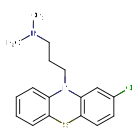
Chlorpromazine is a phenothiazine antipsychotic used to treat nausea, vomiting, preoperative anxiety, schizophrenia, bipolar disorder, and severe behavioral problems in children. Like the other drugs in this class, chlorpromazine's antipsychotic actions are thought to be due to long-term adaptation by the brain to blocking dopamine receptors.
- Mechanism
- Curator reviewed
Chlorpromazine acts as an antagonist (blocking agent) on different postsysnaptic receptors -on dopaminergic-receptors (subtypes D1, D2, D3 and D4 - different antipsychotic properties on productive and unproductive symptoms), on serotonergic-receptors (5-HT1 and 5-HT2, with anxiolytic, antidepressive and antiaggressive properties as well as an attenuation of extrapypramidal side-effects, but also leading to weight gain, fall in blood pressure, sedation and ejaculation difficulties), on histaminergic-receptors (H1-receptors, sedation, antiemesis, vertigo, fall in blood pressure and weight gain), alpha1/alpha2-receptors (antisympathomimetic properties, lowering of blood pressure, reflex tachycardia, vertigo, sedation, hypersalivation and incontinence as well as sexual dysfunction, but may also attenuate pseudoparkinsonism - controversial) and finally on muscarinic (cholinergic) M1/M2-receptors (causing anticholinergic symptoms like dry mouth, blurred vision, obstipation, difficulty/inability to urinate, sinus tachycardia, ECG-changes and loss of memory, but the anticholinergic action may attenuate extrapyramidal side-effects). Additionally, Chlorpromazine is a weak presynaptic inhibitor of Dopamine reuptake, which may lead to (mild) antidepressive and antiparkinsonian effects. This action could also account for psychomotor agitation and amplification of psychosis (very rarely noted in clinical use).
- Primary indication
- For the treatment of schizophrenia; to control nausea and vomiting; for relief of restlessness and apprehension before surgery; for acute intermittent porphyria; as an adjunct in the treatment of tetanus; to control the manifestations of...Curator reviewed · 12 structured indications
- Formula / weight
- C17H19ClN2S · 318.864 g/mol (avg)
- First approval
- Canada, 2000 · United States, 1973
- Code names
- J2.794D · NSC-167745 · NSC-226514
Resolves to
ZPEIMTDSQAKGNT-UHFFFAOYSA-NSMILESCN(C)CCCN1C2=CC=CC=C2SC2=C1C=C(Cl)C=C2What you can answer from here — as of September 23, 2026
Which drugs share a target with Chlorpromazine, and which of those have an active Phase 3 trial?
Create a free account or log in to explore the full data card.
Create Account