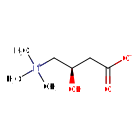
Levocarnitine is a quaternary ammonium compound used to treat carnitine deficiency or to stimulate gastric and pancreatic secretions in hyperlipoproteinemia. Constituent of striated muscle and liver.
- Mechanism
- Curator reviewed
Levocarnitine can be synthesised within the body from the amino acids lysine or methionine. Vitamin C (ascorbic acid) is essential to the synthesis of carnitine. Levocarnitine is a carrier molecule in the transport of long chain fatty acids across the inner mitochondrial membrane. It also exports acyl groups from subcellular organelles and from cells to urine before they accumulate to toxic concentrations. Only the L isomer of carnitine (sometimes called vitamin BT) affects lipid metabolism. Levocarnitine is handled by several proteins in different pathways including carnitine transporters, carnitine translocases, carnitine acetyltransferases and carnitine palmitoyltransferases.
- Primary indication
- For treatment of primary systemic carnitine deficiency, a genetic impairment of normal biosynthesis or utilization of levocarnitine from dietary sources, or for the treatment of secondary carnitine deficiency resulting from an inborn error of metabolism...Curator reviewed · 4 structured indications
- Formula / weight
- C7H15NO3 · 161.1989 g/mol (avg)
- First approval
- Canada, 2017 · United States, 1985
- Also known as
- (R)-Carnitine · Carnitine · L-Carnitine · Vitamin BT
- Code names
- ST 261
- Brand names
Resolves to
PHIQHXFUZVPYII-ZCFIWIBFSA-NSMILESC[N+](C)(C)C[C@H](O)CC([O-])=OWhat you can answer from here — as of September 23, 2026
Which drugs share a target with Levocarnitine, and which of those have an active Phase 3 trial?
Create a free account or log in to explore the full data card.
Create Account