Mersalyl is the sodium salt form of mersalyl acid, a mercurial diuretic. It is an outdated drug, and its approval has been discontinued by the FDA. Mersalyl acid is currently... Mersalyl acid is currently replaced by less toxic non-mercury containing diuretics.
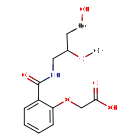
- Mechanism
- Curator reviewed · 2 references
Mersalyl is a mercurial diuretic which acts on the renal tubules, increasing the excretion of sodium and chloride, in approximately equal amounts, and of water. As a result, blood pressure and edema is markedly decreased.
High-affinity binding of the divalent mercuric ion to thiol or sulfhydryl groups of proteins is believed to be the major mechanism for the activity of mercury. Through alterations in intracellular thiol status, mercury can promote oxidative stress, lipid peroxidation, mitochondrial dysfunction, and changes in heme metabolism. Mercury is known to bind to microsomal and mitochondrial enzymes, resulting in cell injury and death. For example, mercury is known to inhibit aquaporins, halting water flow across the cell membrane. It also inhibits the protein LCK, which causes decreased T-cell signaling and immune system depression. Mercury is also believed to inhibit neuronal excitability by acting on the postsynaptic neuronal membrane. It also affects the nervous system by inhibiting protein kinase C and alkaline phosphatase, which impairs brain microvascular formation and function, as well as alters the blood-brain barrier. Organic mercury exhibits developmental effects by binding to tubulin, which prevents microtubule assembly and causes mitotic inhibition. In addition, mercury produces an autoimmune response, likely by modification of major histocompatibility complex (MHC) class II molecules, self-peptides, T-cell receptors, or cell-surface adhesion molecules.
- Primary indication
- Elevated blood pressure, edema.Curator reviewed
- Formula / weight
- C13H17HgNO6 · 483.87 g/mol (avg)
- Also known as
- Mersal
Resolves to
HQRSUIDICNOLPX-UHFFFAOYSA-MSMILESCOC(CNC(=O)C1=CC=CC=C1OCC(O)=O)C[Hg]OWhat you can answer from here — as of August 29, 2026
Which drugs share a target with Mersalyl, and which of those have an active Phase 3 trial?
Create a free account or log in to explore the full data card.
Create Account