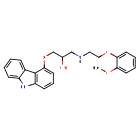
Carvedilol is a non selective beta-adrenergic antagonist used to treat mild to severe chronic heart failure, hypertension, and left ventricular dysfunction following myocardial infarction in clinically stable patients. Carvedilol is a racemic mixture where the S(-) enantiomer is both a beta and alpha-1 adrenoceptor blocker, and the R(+) enantiomer is an alpha-1 adrenoceptor blocker.
- Mechanism
- Curator reviewed · 5 references
Carvedilol inhibits exercise induced tachycardia through its inhibition of beta adrenoceptors. Carvedilol's action on alpha-1 adrenergic receptors relaxes smooth muscle in vasculature, leading to reduced peripheral vascular resistance and an overall reduction in blood pressure. At higher doses, calcium channel blocking and antioxidant activity can also be seen. The antioxidant activity of carvedilol prevents oxidation of low density lipoprotein and its uptake into coronary circulation.
- Primary indication
- Carvedilol is indicated to treat mild to severe heart failure, left ventricular dysfunction after myocardial infarction with ventricular ejection fraction ≤40%, or hypertension.Curator reviewed · 7 structured indications
- Formula / weight
- C24H26N2O4 · 406.4742 g/mol (avg)
- First approval
- Canada, 1998 · United States, 1997
- Code names
- SKF 105517
- Brand names
Resolves to
OGHNVEJMJSYVRP-UHFFFAOYSA-NSMILESCOC1=CC=CC=C1OCCNCC(O)COC1=CC=CC2=C1C1=CC=CC=C1N2What you can answer from here — as of September 23, 2026
Which drugs share a target with Carvedilol, and which of those have an active Phase 3 trial?
Create a free account or log in to explore the full data card.
Create Account