Atropine is a muscarinic antagonist used to treat poisoning by muscarinic agents, including organophosphates and other drugs. Atropine is an alkaloid originally synthesized from Atropa belladonna.
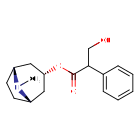
- Mechanism
- Curator reviewed · 7 references
Atropine binds to and inhibits muscarinic acetylcholine receptors, competitively blocking the effects of acetylcholine and other choline esters. It acts as a reversible non-specific antagonist of muscarinic receptors, showing affinity for the M1, M2, M3, M4 and M5 receptor subtypes. Atropine antagonizes the effects of acetylcholine on tissues innervated by postganglionic cholinergic nerves, such as smooth muscle, cardiac tissue, exocrine glands and the central nervous system. Also, it acts in less innervated smooth muscle that responds to endogenous acetylcholine. The actions of atropine can be overcome by increasing the concentration of acetylcholine at receptor sites (for instance, the use of anticholinesterase agents that inhibit the hydrolysis of acetylcholine).
- Primary indication
- The intravenous, intramuscular, subcutaneous, intraosseous and endotracheal use of atropine is indicated for the temporary blockade of severe or life-threatening muscarinic effects.Curator reviewed · 31 structured indications
- Formula / weight
- C17H23NO3 · 289.3694 g/mol (avg)
- First approval
- Canada, 2001 · United States, 1960 · European Union, 2025
- Also known as
- dl-Hyoscyamine · dl-tropyltropate · Tropine tropate
- Code names
- NSC 61810
- Brand names
Resolves to
RKUNBYITZUJHSG-SPUOUPEWSA-NSMILESCN1[C@H]2CC[C@@H]1C[C@@H](C2)OC(=O)C(CO)C1=CC=CC=C1What you can answer from here — as of September 23, 2026
Which drugs share a target with Atropine, and which of those have an active Phase 3 trial?
Create a free account or log in to explore the full data card.
Create Account