Mesalazine is an aminosalicylate drug used to treat mild to moderate active ulcerative colitis and also to maintain remission once achieved. An anti-inflammatory agent, structurally related to the salicylates and non-steroidal anti-inflammatory drugs like acetylsalicylic acid, which is active in inflammatory bowel disease.
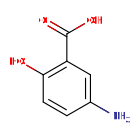
- Mechanism
- Curator reviewed · 11 references
Although the mechanism of action of mesalazine is not fully understood, it is believed to possess a topical anti-inflammatory effect on colonic epithelial cells. Mucosal production of arachidonic acid metabolites, both through the cyclooxygenase pathways, i.e., prostanoids, and through the lipoxygenase pathways, i.e., leukotrienes and hydroxyeicosatetraenoic acids, is increased in patients with chronic inflammatory bowel disease, and it is possible that mesalazine diminishes inflammation by blocking cyclooxygenase and inhibiting prostaglandin production in the colon.
Furthermore, mesalazine also has the potential to inhibit the activation of Nuclear Factor kappa B (NFkB) and consequently the production of key pro-inflammatory cytokines. It has been proposed that reduced expression of PPAR gamma nuclear receptors (gamma form of peroxisome proliferator-activated receptors) may be implicated in ulcerative colitis, and that mesalazine produces pharmacodynamic effects through direct activation of PPAR gamma receptors in the colonic/rectal epithelium. Other research also showed the potential involvement of inducible NO synthase (iNOS) and that mesalazine can inhibit this enzyme to amiliorate the enteropathy in inflammatory bowel diseases.
Moreover, since increased leukocyte migration, abnormal cytokine production, increased production of arachidonic acid metabolites, particularly leukotriene B4, and increased free radical formation in the inflamed intestinal tissue are all present in patients with inflammatory bowel disease it is also believed that mesalazine has in-vitro and in-vivo pharmacological effects that inhibit leukocyte chemotaxis, decrease cytokine and leukotriene production and scavenge for free radicals.
- Primary indication
- Mesalazine is indicated for the treatment of mildly to moderately active ulcerative colitis in adults and patients 5 years or older..Curator reviewed · 15 structured indications
- Formula / weight
- C7H7NO3 · 153.1354 g/mol (avg)
- First approval
- Canada, 1994 · United States, 1988
- Also known as
- 5-aminosalicylic acid · 5-ASA · m-Aminosalicylic acid · Mesalamine
- Code names
- MAX-002 · SPD476
- Brand names
Resolves to
KBOPZPXVLCULAV-UHFFFAOYSA-NSMILESNC1=CC(C(O)=O)=C(O)C=C1What you can answer from here — as of September 23, 2026
Which drugs share a target with Mesalazine, and which of those have an active Phase 3 trial?
Create a free account or log in to explore the full data card.
Create Account