Glutamic acid is an amino acid commonly found as a component in total parenteral nutrition. A peptide that is a homopolymer of glutamic acid.
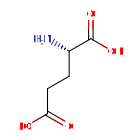
- Mechanism
- Curator reviewed
Glutamate activates both ionotropic and metabotropic glutamate receptors. The ionotropic ones being non-NMDA (AMPA and kainate) and NMDA receptors. Free glutamic acid cannot cross the blood-brain barrier in appreciable quantities; instead it is converted into L-glutamine, which the brain uses for fuel and protein synthesis. It is conjectured that glutamate is involved in cognitive functions like learning and memory in the brain, though excessive amounts may cause neuronal damage associated in diseases like amyotrophic lateral sclerosis, lathyrism, and Alzheimer's disease. Also, the drug phencyclidine (more commonly known as PCP) antagonizes glutamate at the NMDA receptor, causing behavior reminiscent of schizophrenia. Glutamate in action is extremely difficult to study due to its transient nature.
- Primary indication
- Considered to be nature's "Brain food" by improving mental capacities; helps speed the healing of ulcers; gives a "lift" from fatigue; helps control alcoholism, schizophrenia and the craving for sugar.Curator reviewed · 1 structured indication
- Formula / weight
- C5H9NO4 · 147.1293 g/mol (avg)
- First approval
- Canada, 1999 · United States, 1984
- Code names
- E-620 · FEMA NO. 3285 · INS-620 · INS NO.620 · NSC-143503
- Brand names
Resolves to
WHUUTDBJXJRKMK-VKHMYHEASA-NSMILESN[C@@H](CCC(O)=O)C(O)=OWhat you can answer from here — as of September 23, 2026
Which drugs share a target with Glutamic acid, and which of those have an active Phase 3 trial?
Create a free account or log in to explore the full data card.
Create Account