Probenecid is a medication used to treat gouty arthritis, tophaceous gout, and hyperuricemia. The prototypical uricosuric agent.
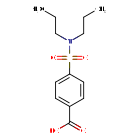
- Mechanism
- Curator reviewed
Probenecid inhibits the tubular reabsorption of urate, thus increasing the urinary excretion of uric acid and decreasing serum urate levels. Probenecid may also reduce plasma binding of urate and inhibit renal secretion of uric acid at subtherapeutic concentrations. The mechanism by which probenecid inhibits renal tubular transport is not known, but the drug may inhibit transport enzymes that require a source of high energy phosphate bonds and/or nonspecifically interfere with substrate access to protein receptor sites on the kidney tubules.
- Primary indication
- For the reduction of serum uric acid concentrations in chronic gouty arthritis and tophaceous gout in patients with frequent disabling gout attacks.Curator reviewed · 7 structured indications
- Formula / weight
- C13H19NO4S · 285.359 g/mol (avg)
- First approval
- Canada, 2004 · United States, 1976
- Also known as
- Probenecid acid
- Code names
- HC 5006 · NSC-18786 · TD-213
- Brand names
Resolves to
DBABZHXKTCFAPX-UHFFFAOYSA-NSMILESCCCN(CCC)S(=O)(=O)C1=CC=C(C=C1)C(O)=OWhat you can answer from here — as of September 23, 2026
Which drugs share a target with Probenecid, and which of those have an active Phase 3 trial?
Create a free account or log in to explore the full data card.
Create Account