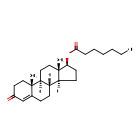
Testosterone enanthate is an androgen used to treat low or absent testosterone. Testosterone enanthate is an esterified variant of testosterone that comes as an injectable compound with a slow-release rate.
- Mechanism
- Curator reviewed · 5 references
The effects of testosterone in humans and other vertebrates occur by way of two main mechanisms: by activation of the androgen receptor (directly or as DHT), and by conversion to estradiol and activation of certain estrogen receptors. Free testosterone (T) is transported into the cytoplasm of target tissue cells, where it can bind to the androgen receptor, or can be reduced to 5α-dihydrotestosterone (DHT) by the cytoplasmic enzyme 5α-reductase. DHT binds to the same androgen receptor even more strongly than T, so that its androgenic potency is about 2.5 times that of T. The T-receptor or DHT-receptor complex undergoes a structural change that allows it to move into the cell nucleus and bind directly to specific nucleotide sequences of the chromosomal DNA. The areas of binding are called hormone response elements (HREs), and influence transcriptional activity of certain genes, producing androgen effects.
Such activities are useful as endogenous androgens like testosterone and dihydrotestosterone are responsible for the normal growth and development of the male sex organs and for maintenance of secondary sex characteristics. These effects include the growth and maturation of the prostate, seminal vesicles, penis, and scrotum; the development of male hair distribution, such as facial, pubic, chest, and axillary hair; laryngeal enlargement, vocal cord thickening, and alterations in body musculature and fat distribution.
Male hypogonadism, a clinical syndrome resulting from insufficient secretion of testosterone, has two main etiologies. Primary hypogonadism is caused by defects of the gonads, such as Klinefelter’s syndrome or Leydig cell aplasia, whereas secondary hypogonadism is the failure of the hypothalamus (or pituitary) to produce sufficient gonadotropins (FSH, LH).
- Primary indication
- Testosterone enanthate in males is indicated as a replacement therapy in conditions associated with a deficiency or absence of endogenous testosterone.Curator reviewed · 3 structured indications
- Formula / weight
- C26H40O3 · 400.594 g/mol (avg)
- First approval
- Canada, 2019 · United States, 1953
- Also known as
- Testosterone heptanoate
- Brand names
Resolves to
VOCBWIIFXDYGNZ-IXKNJLPQSA-NSMILES[H][C@@]12CC[C@H](OC(=O)CCCCCC)[C@@]1(C)CC[C@@]1([H])[C@@]2([H])CCC2=CC(=O)CC[C@]12CWhat you can answer from here — as of September 23, 2026
Which drugs share a target with Testosterone enanthate, and which of those have an active Phase 3 trial?
Create a free account or log in to explore the full data card.
Create Account