Ketoconazole is a broad spectrum antifungal used to treat seborrheic dermatitis and fungal skin infections. It functions by preventing the synthesis of ergosterol, the fungal equivalent of cholesterol, thereby increasing membrane fluidity and preventing growth of the fungus.
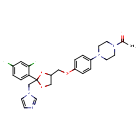
- Mechanism
- Curator reviewed · 2 references
Ketoconazole interacts with 14-α-sterol demethylase, a cytochrome P-450 enzyme necessary for the conversion of lanosterol to ergosterol. This results in inhibition of ergosterol synthesis and increased fungal cellular permeability due to reduced amounts of ergosterol present in the fungal cell membrane. This metabolic inhibition also results in accumulation of 14α-methyl-3,6-diol, a toxic metabolite. The increase in membrane fluidity is also thought to produce impairment of membrane-bound enzyme systems as components become less closely packed.
- Primary indication
- Ketoconazole is used in the treatment or prevention of fungal infections including blastomycosis, candidiasis, coccidioidomycosis, histoplasmosis, chromomycosis, and paracoccidioidomycosis.Curator reviewed · 29 structured indications
- Formula / weight
- C26H28Cl2N4O4 · 531.431 g/mol (avg)
- First approval
- Canada, 2001 · United States, 1981 · European Union, 2020
- Also known as
- Ketozole
- Code names
- KW-1414 · R-41400
- Brand names
Resolves to
XMAYWYJOQHXEEK-UHFFFAOYSA-NSMILESCC(=O)N1CCN(CC1)C1=CC=C(OCC2COC(CN3C=CN=C3)(O2)C2=CC=C(Cl)C=C2Cl)C=C1What you can answer from here — as of September 23, 2026
Which drugs share a target with Ketoconazole, and which of those have an active Phase 3 trial?
Create a free account or log in to explore the full data card.
Create Account