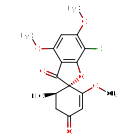
Griseofulvin is an antifungal agent used to treat a variety of superficial tinea infections and fungal infections of the fingernails and toes. A medication used to treat ringworm, athlete's foot, jock itch, and infections caused by fungus on the scalp, skin and nails.
- Mechanism
- Curator reviewed
Griseofulvin is fungistatic, however the exact mechanism by which it inhibits the growth of dermatophytes is not clear. It is thought to inhibit fungal cell mitosis and nuclear acid synthesis. It also binds to and interferes with the function of spindle and cytoplasmic microtubules by binding to alpha and beta tubulin. It binds to keratin in human cells, then once it reaches the fungal site of action, it binds to fungal microtubes thus altering the fungal process of mitosis.
- Primary indication
- For the treatment of ringworm infections of the skin, hair, and nails, namely: tinea corporis, tinea pedis, tinea cruris, tinea barbae, cradle cap or other conditions caused by Trichophyton or Microsporum fungi.Curator reviewed · 6 structured indications
- Formula / weight
- C17H17ClO6 · 352.766 g/mol (avg)
- First approval
- Canada, 1962 · United States, 1971
- Also known as
- Amudane
- Brand names
Resolves to
DDUHZTYCFQRHIY-RBHXEPJQSA-NSMILESCOC1=CC(OC)=C(Cl)C2=C1C(=O)[C@]1(O2)[C@H](C)CC(=O)C=C1OCWhat you can answer from here — as of September 23, 2026
Which drugs share a target with Griseofulvin, and which of those have an active Phase 3 trial?
Create a free account or log in to explore the full data card.
Create Account