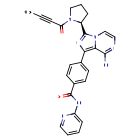
Acalabrutinib is a Bruton tyrosine kinase inhibitor used to treat mantle cell lymphoma, chronic lymphocytic leukemia, and small lymphocytic lymphoma. To date, acalabrutinib has been used in trials studying the treatment of B-All, myelofibrosis, ovarian cancer, multiple myeloma, and Hodgkin lymphoma, among others.
- Mechanism
- Curator reviewed · 10 references
Mantle Cell Lymphoma (MCL) is a rare yet aggressive type of B-cell non-Hodgkin lymphoma (NHL) with poor prognosis. Subsequently, relapse is common in MCL patients and ultimately represents disease progression.
Lymphoma occurs when immune system lymphocytes grow and multiply uncontrollably. Such cancerous lymphocytes may travel to many parts of the body, including the lymph nodes, spleen, bone marrow, blood, and other organs where they can multiply and form a mass(es) called a tumor. One of the main kinds of lymphocytes that can develop into cancerous lymphomas are the body's own B-lymphocytes (B-cells).
Bruton Tyrosine Kinase (BTK) is a signalling molecule of the B-cell antigen receptor and cytokine receptor pathways. Such BTK signaling causes the activation of pathways necessary for B-cell proliferation, trafficking, chemotaxis, and adhesion.
Acalabrutinib is a small molecule inhibitor of BTK. Both acalabrutinib and its active metabolite, ACP-5862, act to form a covalent bond with a cysteine residue (Cys481) in the BTK active site, leading to inhibition of BTK enzymatic activity. As a result, acalabrutinib inhibits BTK-mediated activation of downstream signaling proteins CD86 and CD69, which ultimately inhibits malignant B-cell proliferation and survival
Whereas ibrutinib is typically recognized as the first-in-class BTK inhibitor, acalabrutinib is considered a second generation BTK inhibitor primarily because it demonstrates highter selectivity and inhibition of the targeted activity of BTK while having a much greater IC50 or otherwise virtually no inhibition on the kinase activities of ITK, EGFR, ERBB2, ERBB4, JAK3, BLK, FGR, FYN, HCK, LCK, LYN, SRC, and YES1.
In effect, acalabrutinib was rationally designed to be more potent and selective than ibrutinib, all the while demonstrating fewer adverse effects - in theory - because of the drug's minimized off target effects.
- Primary indication
- Acalabrutinib is indicated for: The treatment of adult patients with Mantle Cell Lymphoma (MCL) who have received at least one prior therapy. - The treatment of adult patients with chronic lymphocytic leukemia and small lymphocytic...Curator reviewed · 4 structured indications
- Formula / weight
- C26H23N7O2 · 465.517 g/mol (avg)
- First approval
- Canada, 2019 · United States, 2017 · European Union, 2020
- Code names
- ACP-196
- Brand names
Resolves to
WDENQIQQYWYTPO-IBGZPJMESA-NSMILESCC#CC(=O)N1CCC[C@H]1C1=NC(=C2N1C=CN=C2N)C1=CC=C(C=C1)C(=O)NC1=CC=CC=N1What you can answer from here — as of September 23, 2026
Which drugs share a target with Acalabrutinib, and which of those have an active Phase 3 trial?
Create a free account or log in to explore the full data card.
Create Account