Benzonatate is a non-narcotic oral antitussive drug used to suppress coughing. It works to reduce the activity of cough reflex by desensitizing the tissues of the lungs and pleura involved in the cough reflex.
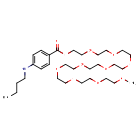
- Mechanism
- Curator reviewed · 7 references
Benzonatate is a local anesthetic drug that acts peripherally by anesthetizing and reducing the activity of vagal stretch receptors or nerve fibres located in the respiratory passages, lungs, and pleura. Once the stretch receptors are stimulated, they send impulses to the cough centre located in the medulla via an afferent pathway consisting of sensory nerve fibres or the vagus nerve. The efferent signal is then generated that sends impulses to the expiratory muscles to produce a cough. Anesthetizing these receptors by benzonatate results in the inhibition of the cough reflex activity and cough production. Benzonatate also inhibits the transmission of impulses of the cough reflex in the vagal nuclei of the medulla. There are several proposed mechanisms of benzonatate; it is also a potent voltage-gated sodium channel inhibitor.
- Primary indication
- Benzonatate is indicated for the symptomatic relief of cough.Curator reviewed · 1 structured indication
- Formula / weight
- C30H53NO11 · 603.7419 g/mol (avg)
- First approval
- United States, 1958
- Also known as
- Benzononatine
- Code names
- KM 65
Resolves to
MAFMQEKGGFWBAB-UHFFFAOYSA-NSMILESCCCCNC1=CC=C(C=C1)C(=O)OCCOCCOCCOCCOCCOCCOCCOCCOCCOCWhat you can answer from here — as of October 13, 2026
Which drugs share a target with Benzonatate, and which of those have an active Phase 3 trial?
Create a free account or log in to explore the full data card.
Create Account