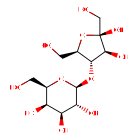
Lactulose is a disaccharide derivative of lactose used to treat constipation and portal systemic encephalopathy. Despite being first synthesized in 1929, investigations regarding its possible use as a laxative for the treatment of chronic constipation did not occur until the 1960s and its first clinical use for treating PSE was...
- Mechanism
- Curator reviewed · 1 reference
Lactulose is a synthetic disaccharide derivative of lactose that consists of one molecule of galactose and one molecule of fructose. Saccharolytic bacteria present in the large intestine subsequently break the substance down into organic acids like lactic acid and small amounts of formic and acetic acids. Such resultant volatile fatty acid metabolites, in combination with hydrogen and methane that is also generated consequently enhance intraluminal gas formation, peristaltic gut motility, and elicit an osmotic effect that facilitates an increase in the water content of stool as well as associated stool softening. All of these actions ultimately assist in facilitating and increasing the frequency of bowel movements in patients experiencing constipation, although it may take 24 to 48 hours after using the medication for this laxative effect to become evident.
At the same time, the formation of such acids via the metabolism of lactulose by colonic bacteria also acidifies the contents of the colon, thereby contributing to the treatment of portal-systemic encephalopathy (PSE). As one of the principal features of PSE involves the accumulation of nitrogenous waste products like ammonia in the systemic circulation, a state in which the colonic contents become more acidic than blood allows ammonia in the circulation to diffuse into the colon.. Furthermore, ammonia that diffuses into the acidic colon is ionized to ammonium ions that are incapable of being absorbed back into the blood. These effects, combined with the laxative action of lactulose facilitates the excretion of excess ammonia. And finally, it is also believed that an acidic colonic environment results in the elimination of urease-producing bacteria that contribute to the formation of ammonia while surviving colonic bacteria use up any trapped ammonia in the colon as a source of nitrogen for protein synthesis.
- Primary indication
- Lactulose is indicated for use as a laxative in the treatment of chronic constipation in adults and geriatric patients.Curator reviewed · 3 structured indications
- Formula / weight
- C12H22O11 · 342.2965 g/mol (avg)
- First approval
- Canada, 1999 · United States, 1966
- Brand names
Resolves to
JCQLYHFGKNRPGE-FCVZTGTOSA-NSMILESOC[C@H]1O[C@](O)(CO)[C@@H](O)[C@@H]1O[C@@H]1O[C@H](CO)[C@H](O)[C@H](O)[C@H]1OWhat you can answer from here — as of September 23, 2026
Which drugs share a target with Lactulose, and which of those have an active Phase 3 trial?
Create a free account or log in to explore the full data card.
Create Account