Mebendazole is a benzimidazole anthelmintic used to treat helminth infections. A benzimidazole that acts by interfering with carbohydrate metabolism and inhibiting polymerization of microtubules.
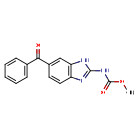
- Mechanism
- Curator reviewed
Mebendazole causes degenerative alterations in the tegument and intestinal cells of the worm by binding to the colchicine-sensitive site of tubulin, thus inhibiting its polymerization or assembly into microtubules. The loss of the cytoplasmic microtubules leads to impaired uptake of glucose by the larval and adult stages of the susceptible parasites, and depletes their glycogen stores. Degenerative changes in the endoplasmic reticulum, the mitochondria of the germinal layer, and the subsequent release of lysosomes result in decreased production of adenosine triphosphate (ATP), which is the energy required for the survival of the helminth. Due to diminished energy production, the parasite is immobilized and eventually dies.
- Primary indication
- For the treatment of Enterobius vermicularis (pinworm), Trichuris trichiura (whipworm), Ascaris lumbricoides (common roundworm), Ancylostoma duodenale (common hookworm), Necator americanus (American hookworm) in single or mixed infections.Curator reviewed · 12 structured indications
- Formula / weight
- C16H13N3O3 · 295.2927 g/mol (avg)
- First approval
- Canada, 1999 · United States, 1975
- Also known as
- MBDZ
- Code names
- NSC-184849 · R-17635
- Brand names
Resolves to
OPXLLQIJSORQAM-UHFFFAOYSA-NSMILESCOC(=O)NC1=NC2=C(N1)C=C(C=C2)C(=O)C1=CC=CC=C1What you can answer from here — as of September 23, 2026
Which drugs share a target with Mebendazole, and which of those have an active Phase 3 trial?
Create a free account or log in to explore the full data card.
Create Account