Pidotimod is a synthetic agent with immunomodulatory properties used in patients with documented cell-mediated immunosuppression to stimulate their immunity during lung and urinary tract infections.
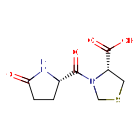
- Mechanism
- Curator reviewed · 5 references
Pidotimod inhibits tumor necrosis factor α (TNF-α) induced increases in extracellular signal-related kinase (ERK) phosphorylation. It also increases nuclear factor κB (NFκB) expression and translocation to the nucleus. It is these to modulatory effects on ERK and NFκB signalling which are thought to produce the increase in toll-like receptor expression seen with pidotimod. Pidotimod increase maturation of dendritic cells responsible for presenting antigens to naive Th-cells. It also appears to result in a greater population these cells diiferentiating to Th1 cells which are believed to mediate the immune response to pathogens like bacteria and viruses. Lastly, pidotimod appears to increase antigen-specific antibody titer and cytotoxic response with antigen exposure. The precise mechanism and timeline of events leading to these effects is unknown.
- Primary indication
- For use as immunostimulant therapy for treatment of cell-mediated immunosuppression with respiratory or urinary infections.Curator reviewed · 3 structured indications
- Formula / weight
- C9H12N2O4S · 244.27 g/mol (avg)
Resolves to
UUTKICFRNVKFRG-WDSKDSINSA-NSMILESOC(=O)[C@@H]1CSCN1C(=O)[C@@H]1CCC(=O)N1What you can answer from here — as of March 06, 2025
Which other approved drugs treat the same conditions as Pidotimod, and which companies have late-stage candidates in those indications?
Create a free account or log in to explore the full data card.
Create Account