Carboplatin is a alkylating agent used to treat advanced ovarian cancer. Early clinical studies of carboplatin were performed in 1982.
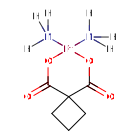
- Mechanism
- Curator reviewed · 5 references
Carboplatin predominantly acts by attaching alkyl groups to the nucleotides, leading to the formation of monoadducts, and DNA fragmenting when repair enzymes attempt to correct the error. 2% of carboplatin's activity comes from DNA cross-linking from a base on one strand to a base on another, preventing DNA strands from separating for synthesis or transcription. Finally, carboplatin can induce a number of different mutations.
- Primary indication
- Carboplatin is indicated in combination with an established combination of chemotherapeutic agents for the initial treatment of advanced ovarian carcinoma.Curator reviewed · 27 structured indications
- Formula / weight
- C6H12N2O4Pt · 371.254 g/mol (avg)
- First approval
- Canada, 2004 · United States, 2004
- Also known as
- Carboplatinum · CBDCA
- Code names
- JM-8 · L01XA02 · NSC-241240
- Brand names
Resolves to
OLESAACUTLOWQZ-UHFFFAOYSA-LSMILES[H][N]([H])([H])[Pt]1(OC(=O)C2(CCC2)C(=O)O1)[N]([H])([H])[H]What you can answer from here — as of September 23, 2026
Which other approved drugs treat the same conditions as Carboplatin, and which companies have late-stage candidates in those indications?
Create a free account or log in to explore the full data card.
Create Account