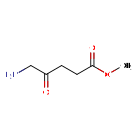
Methyl aminolevulinate is a porphyrin precursor used to treat non-hyperkeratotic, non-pigmented actinic keratosis of the face and scalp. Methyl aminolevulinate is a prodrug that is metabolised to Protoporphyrin IX (a photosensitizer) used in photodynamic therapy.
- Mechanism
- Curator reviewed
Photosensitization following application of methyl aminolevulinate cream occurs through the metabolic conversion of methyl aminolevulinate (prodrug) to photoactive porphyrins (PAP), which accumulates in the skin lesions to which the cream has been applied. When exposed to light of appropriate wavelength and energy, the accumulated photoactive porphyrins produce a photodynamic reaction, resulting in a cytotoxic process dependent upon the simultaneous presence of oxygen. The absorption of light results in an excited state of porphyrin molecules, and subsequent spin transfer from photoactive porphyrins to molecular oxygen generates singlet oxygen, which can further react to form superoxide and hydroxyl radicals.
- Primary indication
- For topical use, in combination with 570 to 670 nm wavelength red light illumination, in the treatment of non-hyperkeratotic actinic keratoses of the face and scalp in immunocompetent patients when used in conjunction with lesion...Curator reviewed · 1 structured indication
- Formula / weight
- C6H11NO3 · 145.1564 g/mol (avg)
- First approval
- Canada, 2009 · United States, 2004
- Also known as
- Aminolevulinic acid methyl ester · methyl 5-aminolevulinate · Methyl delta-aminolevulinate
- Brand names
Resolves to
YUUAYBAIHCDHHD-UHFFFAOYSA-NSMILESCOC(=O)CCC(=O)CNWhat you can answer from here — as of September 23, 2026
Which drugs share a target with Methyl aminolevulinate, and which of those have an active Phase 3 trial?
Create a free account or log in to explore the full data card.
Create Account