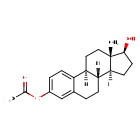
Estradiol acetate is an estrogen used to treat vasomotor symptoms and moderate to severe vulvar and vaginal atrophy from menopause. Estradiol acetate is a pro-drug ester of DB00783, a naturally occurring hormone that circulates endogenously within the human body.
- Mechanism
- Curator reviewed
Estradiol enters target cells freely (e.g., female organs, breasts, hypothalamus, pituitary) and interacts with a target cell receptor. When the estrogen receptor has bound its ligand it can enter the nucleus of the target cell, and regulate gene transcription which leads to formation of messenger RNA. The mRNA interacts with ribosomes to produce specific proteins that express the effect of estradiol upon the target cell. Estrogens increase the hepatic synthesis of sex hormone binding globulin (SHBG), thyroid-binding globulin (TBG), and other serum proteins and suppress follicle-stimulating hormone (FSH) from the anterior pituitary.
Increases in the down-stream effects of ER binding reverses some of the symptoms of menopause, which are primarily caused by a loss of estrogenic activity.
- Primary indication
- Femring is indicated for the treatment of vasomotor and urogenital symptoms associated with menopause.Curator reviewed · 4 structured indications
- Formula / weight
- C20H26O3 · 314.4186 g/mol (avg)
- First approval
- United States, 2003
- Also known as
- Estradiol 3-acetate
- Brand names
Resolves to
FHXBMXJMKMWVRG-SLHNCBLASA-NSMILES[H][C@@]12CC[C@H](O)[C@@]1(C)CC[C@]1([H])C3=CC=C(OC(C)=O)C=C3CC[C@@]21[H]What you can answer from here — as of June 15, 2026
Which drugs share a target with Estradiol acetate, and which of those have an active Phase 3 trial?
Create a free account or log in to explore the full data card.
Create Account