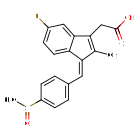
Sulindac is an NSAID used to treat osteoarthritis, rheumatoid arthritis, ankylosing spondylitis, acute subacromial bursitis or supraspinatus tendinitis, and acute gouty arthritis. Sulindac is a nonsteroidal anti-inflammatory drug (NSAID) of the arylalkanoic acid class that is marketed by Merck under the brand name Clinoril.
- Mechanism
- Curator reviewed
Sulindac's exact mechanism of action is unknown. Its antiinflammatory effects are believed to be due to inhibition of both COX-1 and COX-2 which leads to the inhibition of prostaglandin synthesis. Antipyretic effects may be due to action on the hypothalamus, resulting in an increased peripheral blood flow, vasodilation, and subsequent heat dissipation.
- Primary indication
- For acute or long-term use in the relief of signs and symptoms of osteoarthritis, rheumatoid arthritis, ankylosing spondylitis, acute painful shoulder (acute subacromial bursitis/supraspinatus tendinitis), and acute gouty arthritis.Curator reviewed · 8 structured indications
- Formula / weight
- C20H17FO3S · 356.411 g/mol (avg)
- First approval
- Canada, 1998 · United States, 1978
Resolves to
MLKXDPUZXIRXEP-MFOYZWKCSA-NSMILESCC1=C(CC(O)=O)C2=CC(F)=CC=C2\C1=C/C1=CC=C(C=C1)S(C)=OWhat you can answer from here — as of September 23, 2026
Which drugs share a target with Sulindac, and which of those have an active Phase 3 trial?
Create a free account or log in to explore the full data card.
Create Account