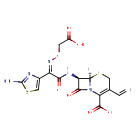
Cefixime is a third generation cephalosporin used to treat susceptible Gram-negative and Gram-positive bacterial infections. Bacteria possess a cell wall comprising a glycopeptide polymer commonly known as peptidoglycan, which is synthesized and remodelled through the action of a family of enzymes known as "penicillin-binding proteins" (PBPs). β-lactam antibiotics, including cephalosporins,...
- Mechanism
- Curator reviewed · 10 references
The bacterial cell wall, which is located at the periphery of Gram-positive bacteria and within the periplasm of Gram-negative bacteria, comprises a glycopeptide polymer synthesized through cross-linking of glycans to peptide stems on alternating saccharides, which is known commonly as peptidoglycan. Cell wall formation, recycling, and remodelling require numerous enzymes, including a family of enzymes with similar active site character despite distinct and sometimes overlapping roles as carboxypeptidases, endopeptidases, transpeptidases, and transglycosylases, known as "penicillin-binding proteins" (PBPs). The number of PBPs differs between bacteria, in which some are considered essential and others redundant. In general, inhibition of one or more essential PBPs results in impaired cell wall homeostasis, loss of cell integrity, and is ultimately bactericidal.
Cefixime is a cephalosporin and cephalosporins work by using their beta-lactam rings to inhibit bacterial cell wall synthesis by binding to the penicillin-binding proteins transpeptidases on bacteria. The inhibition of synthesis of the bacteria cell wall will cause lysis, particularly in fast growing organisms such as bacteria. Specifically, cephalosporins inhibit penicillin-sensitive enzymes responsible for the final 3D structure of the bacterial cell wall which in turn inhibit bacterial cell wall peptidoglycan synthesis.
- Primary indication
- Cefixime is indicated for the treatment of uncomplicated urinary tract infections caused by Escherichia coli and Proteus mirabilis, otitis media caused by Haemophilus influenzae, Moraxella catarrhalis, and Streptococcus pyogenes, pharyngitis and tonsillitis caused by Streptococcus...Curator reviewed · 19 structured indications
- Formula / weight
- C16H15N5O7S2 · 453.45 g/mol (avg)
- First approval
- Canada, 2001 · United States, 2004
- Code names
- CL284635 · FK 027 · FR 17027
- Brand names
Resolves to
OKBVVJOGVLARMR-QSWIMTSFSA-NSMILES[H][C@]12SCC(C=C)=C(N1C(=O)[C@H]2NC(=O)C(=N/OCC(O)=O)\C1=CSC(N)=N1)C(O)=OWhat you can answer from here — as of September 23, 2026
Which drugs share a target with Cefixime, and which of those have an active Phase 3 trial?
Create a free account or log in to explore the full data card.
Create Account