Telbivudine is a thymidine nucleoside analog used for the treatment of chronic hepatitis B with clinical evidence of viral replication or persistent elevations in serum aminotransferases (ALT or AST). Telbivudine is orally administered, with good tolerance, lack of toxicity and no dose-limiting side effects.
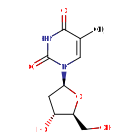
- Mechanism
- Curator reviewed
Telbivudine 5'–triphosphate inhibits HBV DNA polymerase (reverse transcriptase) by competing with the natural substrate, thymidine 5'–triphosphate. This leads to the chain termination of DNA synthesis, thereby inhibiting viral replication. Incorporation of telbivudine 5'–triphosphate into viral DNA also causes DNA chain termination, resulting in inhibition of HBV replication. Telbivudine inhibits anticompliment or second-strand DNA.
- Primary indication
- For the treatment of chronic hepatitis B in adult and adolescent patients ≥16 years of age with evidence of viral replication and either evidence of persistent elevations in serum aminotransferases (ALT or AST) or histologically...Curator reviewed · 1 structured indication
- Formula / weight
- C10H14N2O5 · 242.2286 g/mol (avg)
- First approval
- Canada, 2006 · United States, 2006
- Also known as
- Beta-l-thymidine · Epavudine · L-deoxythymidine · L-DT · L-thymidine
- Code names
- LDT-600 · NV-02B
Resolves to
IQFYYKKMVGJFEH-CSMHCCOUSA-NSMILESCC1=CN([C@@H]2C[C@@H](O)[C@H](CO)O2)C(=O)NC1=OWhat you can answer from here — as of October 24, 2026
Which drugs share a target with Telbivudine, and which of those have an active Phase 3 trial?
Create a free account or log in to explore the full data card.
Create Account