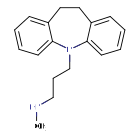
Desipramine is a tricyclic antidepressant used in the treatment of depression. TCAs are structurally similar to phenothiazines.
- Mechanism
- Curator reviewed
Desipramine is a tricyclic antidepressant (TCA) that selectively blocks reuptake of norepinephrine (noradrenaline) from the neuronal synapse. It also inhibits serotonin reuptake, but to a lesser extent compared to tertiary amine TCAs such as imipramine. Inhibition of neurotransmitter reuptake increases stimulation of the post-synaptic neuron. Chronic use of desipramine also leads to down-regulation of beta-adrenergic receptors in the cerebral cortex and sensitization of serotonergic receptors. An overall increase in serotonergic transmission likely confers desipramine its antidepressant effects. Desipramine also possesses minor anticholinergic activity, through its affinity for muscarinic receptors. TCAs are believed to act by restoring normal levels of neurotransmitters via synaptic reuptake inhibition and by increasing serotonergic neurotransmission via serotonergic receptor sensitization in the central nervous system.
- Primary indication
- For relief of symptoms in various depressive syndromes, especially endogenous depression.Curator reviewed · 10 structured indications
- Formula / weight
- C18H22N2 · 266.3807 g/mol (avg)
- First approval
- Canada, 1997 · United States, 1964
- Also known as
- Desmethylimipramine · Monodemethylimipramine · Norimipramine
- Brand names
Resolves to
HCYAFALTSJYZDH-UHFFFAOYSA-NSMILESCNCCCN1C2=CC=CC=C2CCC2=CC=CC=C12What you can answer from here — as of September 23, 2026
Which drugs share a target with Desipramine, and which of those have an active Phase 3 trial?
Create a free account or log in to explore the full data card.
Create Account