Lomustine is an alkylating agent used as a part of chemotherapeutic regimens for the treatment of primary and metastatic brain tumors as well as refractory or relapsed Hodgkin's disease in addition to surgical and/or radiotherapeutic treatments. An alkylating agent of value against both hematologic malignancies and solid tumors.
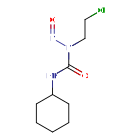
- Mechanism
- Curator reviewed
Lomustine is a highly lipophilic nitrosourea compound which undergoes hydrolysis in vivo to form reactive metabolites. These metabolites cause alkylation and cross-linking of DNA (at the O6 position of guanine-containing bases) and RNA, thus inducing cytotoxicity. Other biologic effects include inhibition of DNA synthesis and some cell cycle phase specificity. Nitrosureas generally lack cross-resistance with other alkylating agents. As lomustine is a nitrosurea, it may also inhibit several key processes such as carbamoylation and modification of cellular proteins.
- Primary indication
- For the treatment of primary and metastatic brain tumors as a component of combination chemotherapy in addition to appropriate surgical and/or radiotherapeutic procedures.Curator reviewed · 3 structured indications
- Formula / weight
- C9H16ClN3O2 · 233.695 g/mol (avg)
- First approval
- Canada, 2009 · United States, 2008
- Also known as
- Chloroethylcyclohexylnitrosourea · CINU · Cyclohexyl chloroethyl nitrosourea
- Code names
- NSC-79037 · RB-1509 · WR-139017
- Brand names
Resolves to
GQYIWUVLTXOXAJ-UHFFFAOYSA-NSMILESClCCN(N=O)C(=O)NC1CCCCC1What you can answer from here — as of September 23, 2026
Which drugs share a target with Lomustine, and which of those have an active Phase 3 trial?
Create a free account or log in to explore the full data card.
Create Account