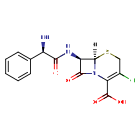
Cefaclor is a second generation cephalosporin used to treat a wide variety of infections in the body. Semisynthetic, broad-spectrum antibiotic derivative of cephalexin.
- Mechanism
- Curator reviewed
Cefaclor, like the penicillins, is a beta-lactam antibiotic. By binding to specific penicillin-binding proteins (PBPs) located inside the bacterial cell wall, it inhibits the third and last stage of bacterial cell wall synthesis. Cell lysis is then mediated by bacterial cell wall autolytic enzymes such as autolysins. It is possible that cefaclor interferes with an autolysin inhibitor.
- Primary indication
- For the treatment of certain infections caused by bacteria such as pneumonia and ear, lung, skin, throat, and urinary tract infections.Curator reviewed · 12 structured indications
- Formula / weight
- C15H14ClN3O4S · 367.807 g/mol (avg)
- First approval
- Canada, 1997 · United States, 1995
- Also known as
- Cephaclor
- Code names
- Compound 99638 · S 6472
Resolves to
QYIYFLOTGYLRGG-GPCCPHFNSA-NSMILES[H][C@]12SCC(Cl)=C(N1C(=O)[C@H]2NC(=O)[C@H](N)C1=CC=CC=C1)C(O)=OWhat you can answer from here — as of October 20, 2026
Which drugs share a target with Cefaclor, and which of those have an active Phase 3 trial?
Create a free account or log in to explore the full data card.
Create Account