Mechlorethamine is an antineoplastic agent used to treat Hodgkin's disease, lymphosarcoma, and chronic myelocytic or lymphocytic leukemia. A vesicant and necrotizing irritant destructive to mucous membranes, mechlorethamine is an alkylating drug.
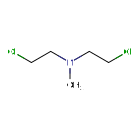
- Mechanism
- Curator reviewed
Alkylating agents work by three different mechanisms: 1) attachment of alkyl groups to DNA bases, resulting in the DNA being fragmented by repair enzymes in their attempts to replace the alkylated bases, preventing DNA synthesis and RNA transcription from the affected DNA, 2) DNA damage via the formation of cross-links (bonds between atoms in the DNA) which prevents DNA from being separated for synthesis or transcription, and 3) the induction of mispairing of the nucleotides leading to mutations. Mechlorethamine is cell cycle phase-nonspecific.
- Primary indication
- For the palliative treatment of Hodgkin's disease (Stages III and IV), lymphosarcoma, chronic myelocytic or chronic lymphocytic leukemia, polycythemia vera, mycosis fungoides, and bronchogenic carcinoma.Curator reviewed · 10 structured indications
- Formula / weight
- C5H11Cl2N · 156.054 g/mol (avg)
- First approval
- Canada, 2009 · United States, 1949 · European Union, 2020
- Also known as
- Chlormethine · Mustine · Nitrogen mustard
- Code names
- NSC-128663 · NSC-762
- Brand names
Resolves to
HAWPXGHAZFHHAD-UHFFFAOYSA-NSMILESCN(CCCl)CCClWhat you can answer from here — as of September 23, 2026
Which other approved drugs treat the same conditions as Mechlorethamine, and which companies have late-stage candidates in those indications?
Create a free account or log in to explore the full data card.
Create Account