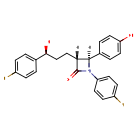
Ezetimibe is a cholesterol absorption inhibitor used to lower total cholesterol, LDL-C, Apo-B, and non-HDL-C in primary hyperlipidemia and familial cholesterolemia. Ezetimibe is a lipid-lowering compound that inhibits intestinal cholesterol and phytosterol absorption.
- Mechanism
- Curator reviewed · 6 references
Ezetimibe mediates its blood cholesterol-lowering effect via selectively inhibiting the absorption of cholesterol and phytosterol by the small intestine without altering the absorption of fat-soluble vitamins and nutrients. The primary target of ezetimibe is the cholesterol transport protein Niemann-Pick C1-Like 1 (NPC1L1) protein. NPC1L1 is expressed on enterocytes/gut lumen (apical) as well as the hepatobiliary (canalicular) interface and plays a role in facilitating internalization of free cholesterol into the enterocyte in conjunction with the adaptor protein 2 (AP2) complex and clathrin. Once cholesterol in the gut lumen or bile is incorporated into the cell membrane of enterocytes, it binds to the sterol-sensing domain of NPC1L1 and forms a NPC1L1/cholesterol complex. The complex is then internalized or endocytosed by joining to AP2 clathrin, forming a vesicle complex that is translocated for storage in the endocytic recycling compartment.
Ezetimibe does not require exocrine pancreatic function for its pharmacological activity; rather, it localizes and appears to act at the brush border of the small intestine. Ezetimibe selectively blocks the NPC1L1 protein in the jejunal brush border, reducing the uptake of intestinal lumen micelles into the enterocyte. Overall, ezetimibe causes a decrease in the delivery of intestinal cholesterol to the liver and reduction of hepatic cholesterol stores and an increase in clearance of cholesterol from the blood. While the full mechanism of action of ezetimibe in reducing the entry of cholesterol into both enterocytes and hepatocytes is not fully understood, one study proposed that ezetimibe prevents the NPC1L1/sterol complex from interacting with AP2 in clathrin coated vesicles and induces a conformational change in NPC1L1, rendering it incapable of binding to sterols. Another study suggested that ezetimibe disrupts the function of other protein complexes involved in regulating cholesterol uptake, including the CAV1–annexin 2 heterocomplex.
- Primary indication
- Ezetimibe is indicated to reduce elevated total-C, LDL-C, Apo B, and non-HDL-C in patients with primary hyperlipidemia, alone or in combination with an HMG-CoA reductase inhibitor (statin).Curator reviewed · 10 structured indications
- Formula / weight
- C24H21F2NO3 · 409.4252 g/mol (avg)
- First approval
- Canada, 2014 · United States, 2002 · European Union, 2021
- Code names
- AD-221B · MK0653 · SCH-58235
- Brand names
Resolves to
OLNTVTPDXPETLC-XPWALMASSA-NSMILES[H][C@]1(CC[C@H](O)C2=CC=C(F)C=C2)C(=O)N(C2=CC=C(F)C=C2)[C@]1([H])C1=CC=C(O)C=C1What you can answer from here — as of September 23, 2026
Which drugs share a target with Ezetimibe, and which of those have an active Phase 3 trial?
Create a free account or log in to explore the full data card.
Create Account