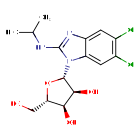
Maribavir is a cytomegalovirus (CMV) pUL97 kinase inhibitor used for the treatment of refractory post-transplant CMV infection. Most standard CMV therapies, such as ganciclovir or foscarnet, target CMV DNA polymerase - while generally effective, these medications tend to promote the development of CMV resistance to DNA polymerase-based therapies, and their use is...
- Mechanism
- Curator reviewed · 7 references
Human cytomegalovirus (CMV) is a herpesvirus commonly causing infection in patients following stem cell or organ transplants. As with other herpesviruses, CMV tends to persist in the host and become reactivated under immunosuppressive conditions - patients requiring multiple immunosuppressive medications to combat transplant rejection are thus at a much higher risk of developing serious CMV infections.
Maribavir belongs to a class of anti-cytomegalovirus antivirals called benzimidazole ribosides. It competitively inhibits the human CMV pUL97 viral protein kinase, which results in viable but severely defective viruses upon replication, although the reasons for this remain poorly defined. In addition, maribavir also inhibits viral release from the nucleus to the cytoplasm by inhibiting pUL97-dependent phosphorylation of the nuclear lamina component lamin A/C, although the extent to which this activity contributes to its antiviral efficacy is unclear.
- Primary indication
- Maribavir is indicated for the treatment of post-transplant cytomegalovirus (CMV) infection (following hematopoietic stem cell transplant or solid organ transplant) which is refractory to standard treatment with ganciclovir, valganciclovir, cidofovir, or foscarnet.Curator reviewed · 2 structured indications
- Formula / weight
- C15H19Cl2N3O4 · 376.23 g/mol (avg)
- First approval
- Canada, 2022 · United States, 2021 · European Union, 2023
- Code names
- 1263-W-94 · TAK-620
- Brand names
Resolves to
KJFBVJALEQWJBS-XUXIUFHCSA-NSMILESCC(C)NC1=NC2=CC(Cl)=C(Cl)C=C2N1[C@H]1O[C@@H](CO)[C@H](O)[C@@H]1OWhat you can answer from here — as of June 15, 2026
Which drugs share a target with Maribavir, and which of those have an active Phase 3 trial?
Create a free account or log in to explore the full data card.
Create Account